
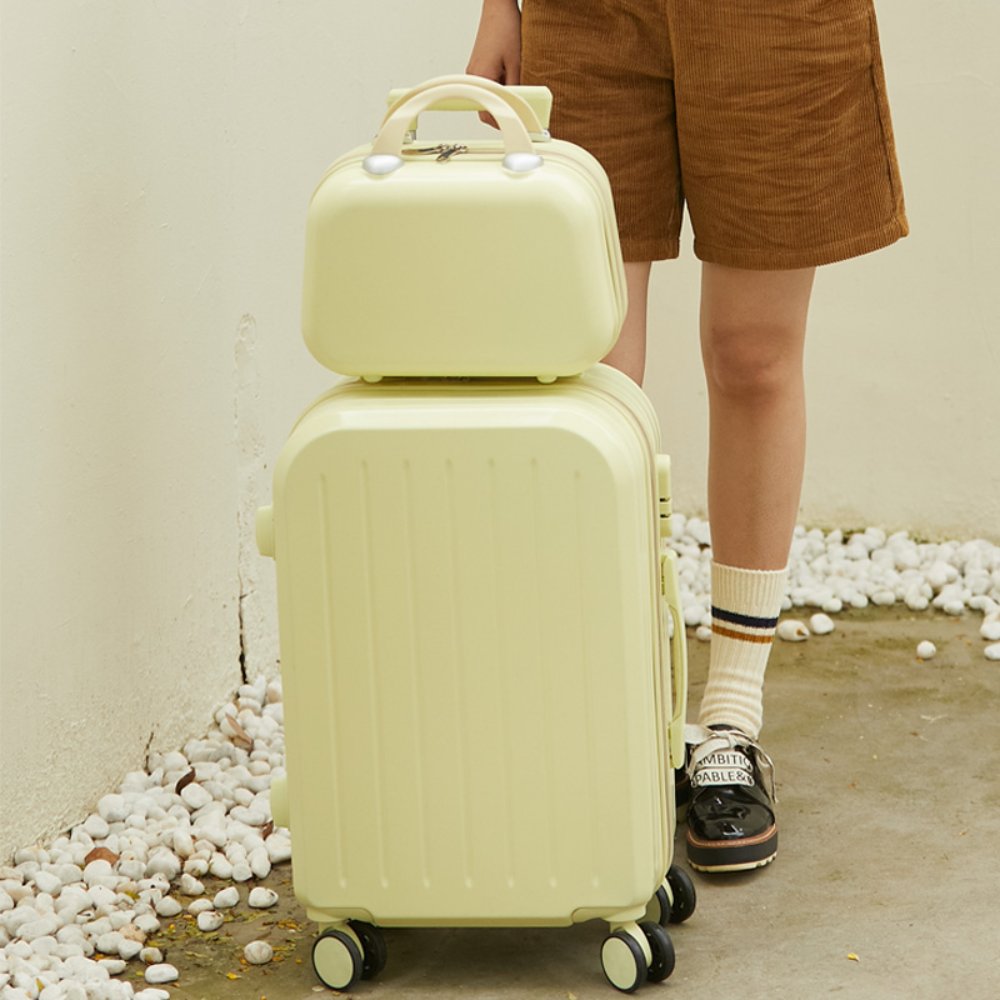
Ask for separate, identified views of the wheel assemblies, carry handles and pulling handle when reviewing a luggage sample. Start with a whole-case photograph that locates each component, then request the close views needed for your questions. Keep appearance observations, component declarations and performance evidence separate. A clear lifestyle image does not establish hidden construction or the suitability of a component for a particular use.
Give every requested view a decision to support
A sample photo request often becomes an unsorted folder of attractive luggage pictures. The buyer can recognize the style but still cannot tell whether the wheel mounting area is visible or whether two handle photographs show the same assembly. The remedy is a short view schedule in which each image answers a named purchasing question.
Hangyue’s catalogue includes a Hard-Shell Travel Suitcase reference. It can help identify the product being discussed, but its catalogue appearance should not substitute for an assembly-specific sample record. Name the supplier item and proposed sample variant, then state whether the requested image concerns the overall layout, an exposed component surface or the relationship between two parts. Avoid filling unseen details from the product name.
Locate the wheels before requesting close photographs
Use an overall view to identify the wheel positions on the particular sample. Assign simple location labels to the assemblies so that later close photographs can be matched to the case. If different assemblies or orientations are offered, ask the supplier to explain which version is represented rather than assuming that all visible wheels share the same component reference.
Request a close view that shows the assembly and the surrounding attachment area relevant to your question. Ask the supplier which details are visible and which require a separate drawing or declaration. A photograph of an exposed wheel surface does not establish an internal material, bearing arrangement, replacement method or durability result. Those questions belong in separate evidence requests when the purchasing specification requires them.
Distinguish carrying grips from the pulling assembly
The word handle can refer to several different things on a suitcase. Identify whether the review concerns an upper carrying grip, another carrying position or the assembly used to pull the case. Ask for the location to be shown on the overall image before requesting a close view. This prevents an answer about one grip from being accepted as evidence for a different assembly.
Where the supplier offers a moving pulling assembly, ask which visible positions and details can be documented on the sample. Tie those views to its component reference and the case variant. Do not infer an extension range, locking arrangement, load limit or operating life from a partially visible tube or grip. If the supplier cannot provide a requested view, retain the unanswered question instead of interpreting the photograph more broadly.
Compare view coverage rather than photograph quantity
An extra overview can add little when the missing information concerns one attachment area. Conversely, a detailed close photograph can be difficult to use if the buyer cannot locate it on the whole case. The following comparison helps a procurement team describe the coverage it needs without prescribing unsupported construction requirements.
View type | Useful question it can answer | What it does not establish alone
Whole-case orientation | Where is the component on this sample? | Its hidden internal construction
Wheel assembly close view | Which exposed assembly and mounting area are shown? | A noise, wear or load performance result
Carrying grip close view | Which grip and attachment locations are represented? | A lifting capacity or fatigue rating
Pulling assembly views | Which visible positions belong to the identified sample? | An unreported operating range or service life
Supplier component drawing | Which features and references are declared? | That the delivered sample automatically matches the drawing
Connect declarations to the physical sample
Record the supplier’s component reference beside each relevant image. If the supplier provides a drawing, identify its revision and ask whether it describes the photographed sample. Keep a material declaration or test document linked to the component it actually covers. A document referring to a different item should not silently become evidence for the current assembly because the two look similar.
If a colour sample or substitute component is proposed, ask which decisions it can support. A representative sample might help review a visible layout while leaving the final component declaration open. State that distinction in the review result. The purpose of the view schedule is to make the evidence usable, not to turn a visual similarity into proof of interchangeable parts or equivalent performance.
• Use the same case and component identifiers across the complete view schedule.
• Describe the missing detail instead of requesting more pictures without a purpose.
• Link drawings and declarations to the component they actually describe.
• Keep any substitute-sample limitations visible in the acceptance record.
Issue a clear result for each component question
Close the review with a small decision register. A wheel-location view may be accepted while a component declaration remains pending. A carrying-grip photograph may need clarification even when the overall luggage appearance is acceptable. These results can coexist because they concern different questions. Ask the supplier to respond against the specific open item so that a replacement image can be connected to the right decision.
Preserve the accepted evidence set with the quotation and sample record. When a revised sample is offered, ask the supplier to identify which assemblies changed and which earlier views remain representative. Do not treat a new file name or a new overall photograph as a complete revision explanation. A controlled view schedule gives the buyer a practical basis for comparison without making unsupported judgments about strength, reliability or compliance.
Frequently asked questions
Does a wheel photograph confirm quiet operation?
It shows the visible wheel arrangement under the conditions represented in the photograph. A noise claim requires suitable supporting information for the identified product and conditions. Keep that performance question separate from an appearance or location approval.
Should every type of handle use one approval photograph?
Only if that image clearly resolves all of the buyer’s questions. Usually the carrying and pulling assemblies need separate identification because they occupy different locations and can have different component references. Request the views needed for each decision.
Can a drawing replace the sample photographs?
A drawing and a photograph answer different questions. The drawing records a declared arrangement; the photograph helps connect the actual sample to that declaration. Ask the supplier to identify any difference instead of assuming automatic correspondence.
Does the pictured smaller case belong to the order?
Its presence in a catalogue scene is not an inclusion decision. Ask for the quoted selling unit and included items separately. Keep that commercial decision distinct from the wheel and handle evidence schedule for the suitcase being reviewed.
Product and contact references
Catalogue reference: confirm matching item: https://hangyueluggage.com/product/hard-shell-travel-suitcase/
Related catalogue reference: https://hangyueluggage.com/product/large-capacity-aluminum-frame-spinner-luggage/
Contact Hangyue Luggage: https://hangyueluggage.com/contact/
Hangyue Luggage blog: https://hangyueluggage.com/blog/