
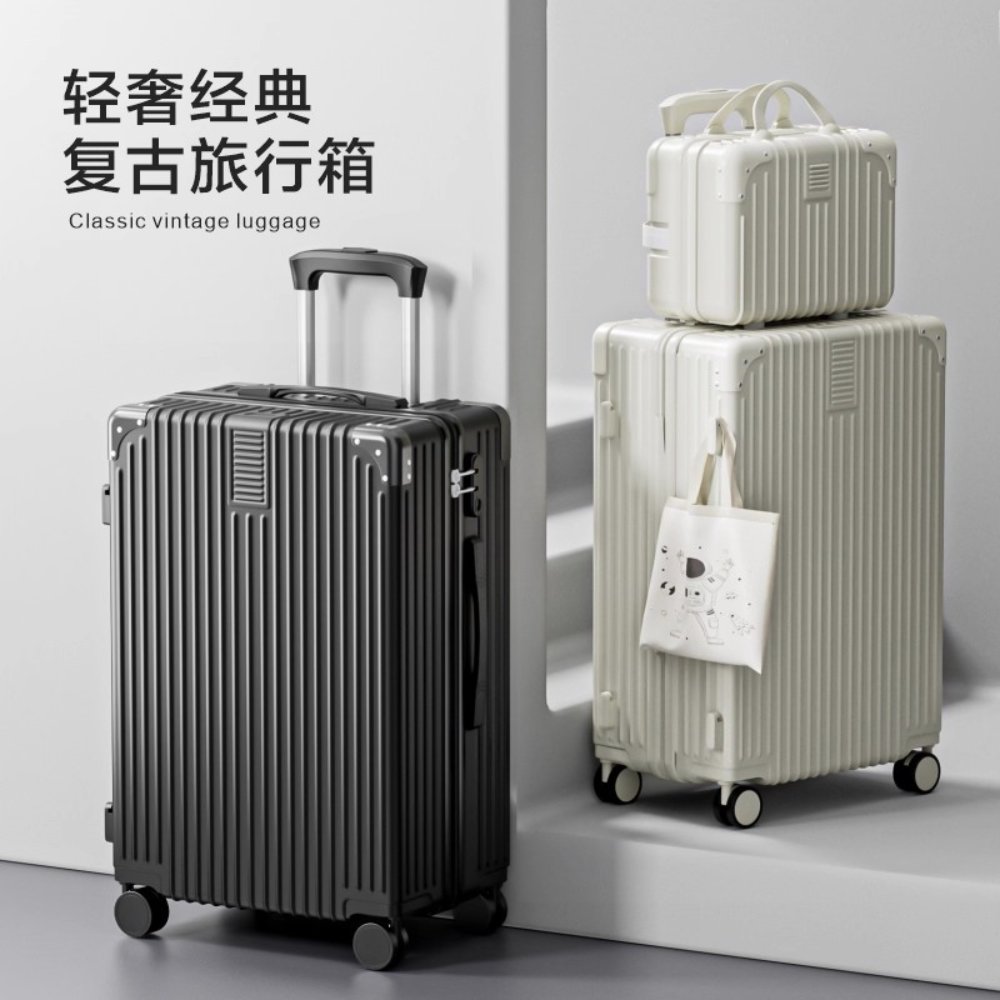
Record suitcase corner packing as a contact map for an identified product and packing revision. Show the case orientation, the proposed protective pieces and the areas where those pieces meet the case and outer packaging. Distinguish built-in product trim from separate shipping protection. Approve the documented arrangement only for the agreed scope; a product photograph does not establish transport performance or a tested packing method.
Define what is being packed before mapping contact
A carton described as containing luggage may hold one suitcase, a group of cases or a selling unit with additional items. These arrangements create different contact relationships. Ask the supplier to identify the exact contents and show the orientation of each item in the proposed pack. Do not begin with a drawing that silently assumes which accessories or smaller cases belong to the order.
Hangyue’s catalogue includes a Vintage Corner-Protected Carry-On Suitcase reference. The name and image can identify the product for an enquiry, but corner protection in a product label does not establish how the shipping carton is packed. Pictured trim is part of the appearance discussion; a proposed transit protector needs a separate description and a clear position in the packing record.
Locate each corner in a consistent orientation
Select a reference view and keep its orientation through the packing discussion. Identify the front face, top and wheel end in the supplier’s drawing or photograph. Use location labels that both parties can follow, particularly when a later view turns the case or shows the underside. The labels are a documentation convention, not a claim that all corners have identical construction.
Ask where the proposed packaging touches the case around each corner and where clearance is intended. Include nearby parts that could change the contact arrangement, such as an exposed wheel, grip or closure area. A broad description such as protected all around leaves these questions open. A marked view lets the supplier show the proposed contact without the buyer inventing a padding thickness, material grade or required clearance.
Compare product views with packing evidence
Use different views for different decisions. An unpacked photograph identifies the item, while a positioned packing photograph shows how the supplier proposes to arrange protection. Neither should be described as a transport test result. Keep the original image and any annotations together so that the buyer can distinguish visible evidence from the proposed explanation.
Evidence view | Decision it supports | Additional question to retain
Unpacked suitcase | Which product and corner locations are involved? | Does it match the quoted variant?
Separate protective pieces | Which pieces are proposed for the pack? | How does the supplier identify their specification?
Case positioned with protection | Where do the pieces contact the case? | Are nearby parts clear or intentionally supported?
Pack before final closure | How are all included items arranged? | Can one item contact another during the proposed arrangement?
Outer packaging view | Which carton and orientation are represented? | What further validation does the buyer require?
Describe protective pieces without assuming their properties
Give each proposed piece a simple identifier and link it to its location on the contact map. Ask the supplier to state the offered material and construction rather than inferring them from colour or appearance. If a protective piece is described by a supplier reference, keep that reference with the drawing. A later substitution should be visible as a change in the record.
Document the relationship between pieces as well as their individual appearance. For example, ask whether a corner piece is separate from an outer liner and how its proposed position is maintained when the carton is assembled. This is a request for the supplier’s packing method, not a recommendation to apply an unverified force or compression. Leave the method unresolved until the supplier can explain the actual proposed arrangement.
Keep nested items and moving parts visible in the discussion
If the order uses a nested arrangement, ask the supplier to identify every included case and show the relevant contact interfaces. Do not assume nesting is offered merely because two cases appear together in a catalogue scene. The buyer should be able to connect the packed configuration to the selling unit and to identify any surfaces that another item or accessory could contact.
Request the proposed packing position of handles, wheels and other protruding parts that are relevant to the selected model. Identify whether they are exposed, supported or kept apart from another surface in the proposed layout. Seeing a part in the product photograph does not tell the buyer how it is arranged inside a carton. The packing map should answer that separate question without making a strength or damage-prevention promise.
• Identify every included item and the proposed packing orientation.
• Link each protective piece to a clearly marked contact location.
• Record wheel, grip and closure questions where they affect the arrangement.
• Keep unverified materials and transport performance outside the accepted visual scope.
Separate layout approval from transport validation
An accepted contact map records an agreed arrangement. It does not establish that the arrangement has passed a particular handling or transport evaluation. If the buyer requires validation, define the applicable packed configuration, conditions and evidence with the supplier and the responsible testing or logistics party. Do not insert an assumed test method or a successful result into the purchasing record.
For repeat orders, retain the accepted product reference, packing revision and included-item schedule. Ask the supplier to identify changes to the product, protective pieces, carton or arrangement before confirming that the old map still applies. A replacement photograph should be connected to the changed decision. This keeps the packing enquiry specific and usable while leaving unsupported protection and compliance claims out of the approval.
Frequently asked questions
Does corner-protected in the product name prove shipping protection?
No. A product name can refer to the appearance or construction of the suitcase itself. Ask separately how the identified case will be packed and what evidence supports the proposed transit protection. Do not substitute the name for a packing record.
Can a catalogue photograph be the contact map?
It can serve as the unmarked product reference. The proposed contact map needs additional information about orientation, protective pieces and outer packaging. Keep annotations linked to supplier confirmation rather than treating them as observed packed evidence.
Should the buyer specify a protective material from its appearance?
Ask for the supplier’s material declaration and offered specification. A photograph does not independently establish composition, density or protective performance. If the material is a purchasing requirement, record how its identity and applicability will be confirmed.
Does approving the map mean the packed goods have been tested?
No. Layout approval and transport validation are different decisions. Any required evaluation needs an agreed configuration, relevant conditions and supporting evidence. Record the actual scope of approval without adding an unperformed test or an unsupported result.
Product and contact references
Catalogue reference: confirm matching item: https://hangyueluggage.com/product/vintage-corner-protected-carry-on-suitcase/
Related catalogue reference: https://hangyueluggage.com/product/hard-shell-travel-suitcase/
Contact Hangyue Luggage: https://hangyueluggage.com/contact/
Hangyue Luggage blog: https://hangyueluggage.com/blog/